
Preparing for a Mormon Wedding
June 7, 2013 by Livi Whitaker
Filed under Mormons
What do you, personally, believe is your greatest purpose? What do you believe is the most important thing you could achieve in this life? Once you have defined that one, specific goal, wouldn’t you do all you could to prepare for it throughout your life?
In the Church of Jesus Christ of Latter-day Saints, (often inadvertently called the Mormon Church), it’s no mistake that we begin teaching about the family early on. The Family and marriage between man and wife are the basic foundational principles of the Gospel of Jesus Christ and are the abiding goal of almost every church member.
Forever Families Are Important to Latter-day Saints
Elder Eric B. Shumway said in October 2008,
Ponder this statement. This single truth—that the cosmic purpose of this earth and the universe has as its central feature marriage and the family, with husband and wife at the core—should inspire our souls and our imaginations. Marriage and family are not human inventions or social constructs evolving from human necessity. They are part of a heavenly order that leads to eternal life and eternal happiness.
Consider the following comments from Elder Russell M. Nelson of the Quorum of the Twelve Apostles: “Marriage brings greater possibilities for happiness than does any other human relationship. … [It] is the foundry for social order, the fountain of virtue, and the foundation for eternal exaltation. … [It] is sanctified when it is cherished and honored in holiness. … Marriage is both a commandment and an exalting principle of the gospel.”
Read more
Mormon Marriage: FAQs
June 7, 2013 by Livi Whitaker
Filed under Mormons
The Church of Jesus Christ of Latter-day Saints, (often inadvertently called The Mormon Church), have normal families in countries all around the world. Our members celebrate marriages in many ways that are similar to most people in various cultures. Marriages usually involve family, food, sometimes
dancing, music and other traditions depending on the area. But, observers of The Church of Jesus Christ (Latter-day Saint, LDS or Mormon) sometimes do have questions about other aspects of “Mormon’ marriages.
“Mormon” Marriage FAQs Q: Are Mormons Polygamists?
No member of The Church of Jesus Christ (often called Latter-day Saints, LDS or Mormons) can enter into the practice of polygamy without being excommunicated. Mormonnewsroom.org details the official church statement:
There are more than 14 million members of The Church of Jesus Christ of Latter-day Saints and not one of them is a polygamist. The practice of polygamy is strictly prohibited in the Church. The general standard of marriage in the Church has always been monogamy, as indicated in the Book of Mormon (see Jacob 2:27). For periods in the Bible polygamy was practiced by the patriarchs Abraham and Jacob, as well as kings David and Solomon. It was again practiced by a minority of Latter-day Saints in the early years of the Church. Polygamy was officially discontinued in 1890 — 122 years ago. Those who practice polygamy today have nothing whatsoever to do with the Church.
Q: Who Can Marry in a Mormon Temple?
Only faithful Mormons who have qualified for a temple “recommend” are able to participate in marriage ceremonies that happen in temples of The Church of Jesus Christ of Latter-day Saints. This recommend reflects among other things that the recommend holder lives 100% morally clean, does not use drugs, alcohol or tobacco, pays a 10% tithe, is honest in all their dealings and has an upright relationship with their family. But this is just the most basic preparation. Just as important, those getting married in the temple need to be spiritually prepared to make heightened promises to God to strive even harder to obey His laws and also be prepared to receive greater blessings. Go here to see some answers from “real” Mormons about why only certain members enter the temple. In August of 2010, the Church Magazine, the Ensign, helped explain about qualifying for entrance to the temple,
Temples are literally houses of the Lord. In the temple we make sacred covenants, or promises, with God that are necessary for us to be with Him in the highest degree of heavenly glory (see Doctrine and Covenants 131:1-4.) These temple covenants lead to the great blessings available through Jesus Christ. We are not expected to be perfect to enter the temple. Rather, the purpose of the things we learn and the covenants we make in the temple is to help perfect us. We must, however, be worthy to enter. A temple recommend signifies that we have been found worthy through an interview with a member of our bishopric or our branch president and also an interview with a member of our stake presidency or mission presidency. Temple recommend interviews are opportunities for us to examine our worthiness. In each of the interviews, our priesthood leaders will ask us about our personal conduct and faith. Our priesthood leaders keep these interviews private and confidential.
Q: Why Is Mormon Temple Marriage Described as ‘Forever’ or ‘Eternal’?
The Church of Jesus Christ operates and exists around the belief in the importance of the family structure. Part of that belief is that it is an eternal unit and that we can be with our loved ones that came before us and with those that pass on while we are living. That is why temples are so important to us. We believe it is the only place where God has designated that these special ceremonies that bind or “seal” in heaven as well as on earth (as it says in Matthew) take place. Mormonnewsroom.org described it this way,
Members of the Church believe that marriages performed in temples are “sealed,” or blessed to last for eternity. The concept that the family unit can continue beyond the grave as a conscious, loving entity, with the marriage partnership and parent-child relationships intact, is a core belief of members of The Church of Jesus Christ of Latter-day Saints. Once a couple is married and sealed in a temple, any children who are then born to them are automatically sealed to them at birth. If children are born before the couple is sealed, those children can later participate in a temple sealing with their parents. Children that are adopted also have an opportunity to be sealed to the adoptive parents. The concept of eternal families comes from scripture and modern-day revelation. For example, the New Testament reference in Matthew 16:19 records Jesus Christ telling the Apostle Peter: “And I will give unto thee the keys of the kingdom of heaven: and whatsoever thou shalt bind on earth shall be bound in heaven: and whatsoever thou shalt loose on earth shall be loosed in heaven.” The Church equates the word “bind” with “seal.” According to research cited in a 2000 article in the Los Angeles Times, “in an era of divorce, Mormon temple weddings are built to last,” with only a 6 percent divorce rate. Another study, published in 1993 in Demography Magazine, concluded that members of The Church of Jesus Christ of Latter-day Saints who marry in one of the Church’s temples are the least likely of all Americans to divorce.
Elder Russell M. Nelson of the Quorum of the Twelve Apostles said of the potential of an eternal, celestial marriage:
The full realization of the blessings of a temple marriage is almost beyond our mortal comprehension. Such a marriage will continue to grow in the celestial realm. There we can become perfected.As Jesus ultimately received the fulness of the glory of the Father,so we may ‘come unto the Father … and in due time receive of his fulness.’
Go here and here for answers from “real” Mormons on forever families and what Mormons believe about eternal life.
Q: Is a Mormon Marriage Considered An Equal Partnership Between Man and Wife?
The Church of Jesus Christ of Latter-day Saints does not believe that one gender is better than the other, or has more authority than the other. The church teaches that as children of God, and as men and women, we all have divine God-given genders and identities and are equal partners. The Family: A Proclamation To The World published by The Church of Jesus Christ in 1995 emphasizes this:
All human beings—male and female—are created in the image of God. Each is a beloved spirit son or daughter of heavenly parents, and, as such, each has a divine nature and destiny. Gender is an essential characteristic of individual premortal, mortal, and eternal identity and purpose.
In an April 2013 Ensign article on equal marriage, the two authors explained that the Adam and Eve account helps us understand the teachings from The Church of Jesus Christ on
equality and gender identity. The account shows us how God created Adam and Eve as two different beings who were unique, with different characteristics, but equal in partnership:
Latter-day Saint theology teaches that gender difference does not superimpose a hierarchy between men and women: one gender does not have greater eternal possibilities than the other. As Elder Earl C. Tingey, formerly of the Presidency of the Seventy, has said: “You must not misunderstand what the Lord meant when Adam was told he was to have a helpmeet. A helpmeet is a companion suited to or equal to [the other]. [They] walk side by side … not one before or behind the other. A helpmeet results in an absolute equal partnership between a husband and a wife. Eve was to be equal to Adam as a husband and wife are to be equal to each other.
Another part of the article I really liked was when the authors pointed out that the Hebrew meaning of the words “over” and “help meet” is “with” and “equal”. A simple translation shows that most of the world has a huge misconception of the Adam and Eve account and how God directed the two:
Over in ‘rule over’ uses the Hebrew bet, which means ruling ‘with,’ not ruling ‘over.’ … The concept of interdependent, equal partners is well grounded in the doctrine of the restored gospel. Eve was Adam’s ‘help meet’ (Genesis 2:18). The original Hebrew for meet means that Eve was adequate for, or equal to, Adam. She wasn’t his servant or his subordinate.
Over the years some may have criticized The Church of Jesus Christ as being a sexist organization, which excludes women and discourages decision making of wives at home. Nothing could be further from the truth. Such behavior is contrary to the Gospel of Jesus Christ which the Church teaches, and church leaders have emphatically spoken against.
Moreover, contrary to scripture and the teachings of latter-day prophets, some men and women have interpreted presiding to mean that after equal counsel, equal consent is not necessary because the presider (or husband) has the right of final say. But President Boyd K. Packer, President of the Quorum of the Twelve Apostles, explained: ‘“In the Church there is a distinct line of authority. We serve where called by those who preside over us. In the home it is a partnership with husband and wife equally yoked together, sharing in decisions, always working together.” Equality does not mean sameness, however. Elder M. Russell Ballard of the Quorum of the Twelve Apostles has taught: “Men and women, though spiritually equal, are entrusted with different but equally significant roles.” A marriage of equal partners is also one in which the partners help one another in their stewardships, indeed, are “obligated to help one another as equal partners.” This partnership extends to housework and childcare. President Packer has said, “There is no task, however menial, connected with the care of babies, the nurturing of children, or with the maintenance of the home that is not [the husband’s] equal obligation.”
From the same Ensign article on marriage equality, Elder Russell M. Nelson of the Quorum of the Twelve Apostles testified:
Brethren and sisters, material possessions and honors of the world do not endure. But your union as wife, husband, and family can. The only duration of family life that satisfies the loftiest longings of the human soul is forever. No sacrifice is too great to have the blessings of an eternal marriage. To qualify, one needs only to deny oneself of ungodliness and honor the ordinances of the temple. … Our family is the focus of our greatest work and joy in this life.
Q: Can Mormons Get Divorced?
The Church of Jesus Christ is on the forefront in teaching the Gospel of Jesus Christ and the eternal significance of families. The church has never stopped teaching about the seriousness of marriage and family, and the plague of divorce. To “Mormons” marriage isn’t simply the person we “fall in love with” and decide to “spend the rest of our lives with”. Our spouse isn’t even just our “soul mate”. Though we don’t mean to belittle or make fun of those sentiments in any way, to us, marriage is an even more enduring commitment. It is a partnership that means more than just an initial romance or a life-long adventure. Temple marriage is an eternal covenant; a partnership that lasts forever – one that allows us to progress, return to our Heavenly Father and reach our full potential. I have always loved that our spouse is the only other person besides God that we have been commanded to love with all our hearts. In Doctrine and Covenants 42:22 we are taught, “Thou shalt love thy wife with all thy heart, and shalt cleave unto her and none else.” On lds.org it says that marriage is more important than all the other trivial things in life:
Because marriage is such an important relationship in life, it needs and deserves time over less-important commitments. Couples can strengthen their marriage as they take time to talk together and to listen to one another, to be thoughtful and respectful, and to express tender feelings and affection often.
Therefore, marriage covenants are taken very seriously and it is strongly encouraged within the church to do all that is possible to save a marriage where possible before divorce – especially if children are involved. On lds.org it says:
The sanctity of marriage and families is taught repeatedly in the scriptures. It has been reaffirmed by modern prophets and apostles. Despite the truths taught about the sanctity of marriage, divorce has become commonplace in the world. Because the family is central to Heavenly Father’s plan for His children, Satan seeks to destroy marriages and families. Because of the poor choices and selfishness of one or both marriage partners, marriages sometimes end in contention, separation, and divorce.
However, marriage choices are between the couple. To obtain dissolution of temple covenants, the husband and wife would need to meet with the appropriate ecclesiastical authority. Lds.org continues:
When men and women marry, they make solemn covenants with each other and with God. Every effort should be made to keep these covenants and preserve marriage. When divorce occurs, individuals have the obligation to forgive rather than to condemn, to lift and to help.
Dallin H. Oaks of the Quorum of the Twelve Apostles gave a very moving address on divorce in April of 2007. He said:
There are many good Church members who have been divorced. I speak first to them. We know that many of you are innocent victims—members whose former spouses persistently betrayed sacred covenants or abandoned or refused to perform marriage responsibilities for an extended period. Members who have experienced such abuse have firsthand knowledge of circumstances worse than divorce. When a marriage is dead and beyond hope of resuscitation, it is needful to have a means to end it… We know that some look back on their divorces with regret at their own partial or predominant fault in the breakup. All who have been through divorce know the pain and need the healing power and hope that come from the Atonement. That healing power and that hope are there for them and also for their children.
Members of the Church come from all parts of the world, from many races, religions, family situations and from all walks of life. Therefore, “Mormons” are a lot more like most people than some might think. Mormons also love to ask questions and learn more about cultures, religions and those around them. Hopefully you’ll ask a question or two the next time you’re around a member of The Church of Jesus Christ of Latter-day Saints. I’m sure they’d love to answer!
Additional Resources:
The Articles of Faith and Basic Mormon Beliefs
Temples of The Church of Jesus Christ of Latter-day Saints
Meridian Idaho Temple Rendering
May 22, 2013 by Livi Whitaker
Filed under About Temples
In April 2011, The Church of Jesus Christ of Latter-day Saints announced at its Semiannual General Conference that a temple would be built in Meridian, Idaho. It will be the 5th temple in Idaho after Idaho Falls, Boise, Twin Falls and Rexburg and the 2nd in the Treasure Valley.
What the Meridian Idaho Mormon Temple Looks Like
This month, a rendering was released of what the Meridian, Idaho temple that is to built at 7345 North Linder Road, a few blocks north of the intersection of North Linder Road and Chinden Blvd will look like. The artist’s rendering and the site plan have been submitted to Ada County for approval.
Latter-day Saint temples are aesthetically beautiful buildings with meticulous landscaping. Everything about the architecture is designed to honor God and complement the local community.
Ldschurchtemples.com says,
“The design is a departure from the traditional towers and steeples of other Latter-day Saint temples, reminiscent of the Cardston Alberta Temple—the faith’s first temple to be designed without a tower, though the Laie Hawaii Temple (based on the Cardston design) was dedicated earlier. The multi-level temple will be topped with a beautiful gold dome supporting a gold-leafed statue of the angel Moroni.” Read more
Potential Site for Arizona Mormon Temple
May 17, 2013 by Livi Whitaker
Filed under About Temples
6th Mormon Temple to Be Added in Arizona
Arizona hosts 5 temples of The Church of Jesus Christ at various stages. Operating temples include Mesa, Gila Valley, and Snowflake while two are under construction in Phoenix and Gilbert. In October of 2012, Church President, Thomas S. Monson, announced a 6th Arizona temple was to be built in Tucson.
Possible Temple Location in Tucson
The church has not yet announced the official location of the temple. Speculation has occurred at the possible site of the Tucson temple in the Catalina foothills.
The Arizona Daily Star reports:
Other large properties owned by the church that could accommodate a temple include 11 acres near Alvernon Way and the Rillito River and several large parcels in Marana. There are no plans on file for those properties.
Church planners submitted preliminary documents to Pima County showing a two-story, 34,000-square-foot temple on 7.46 acres the church purchased in 2010 for $1.6 million. The church also recently bought a home on one acre on the north edge of the possible temple location for $390,000. Read more
Ogden Mormon Temple Receives Angel Moroni Statue
May 17, 2013 by Livi Whitaker
Filed under About Temples
Angel Moroni Atop Mormon Temples
Perhaps one of the most recognizable symbols for temples of The Church of Jesus Christ of Latter-day Saints (often mistakenly called the Mormon Church), is of the Angel Moroni. The prophet from The Book of Mormon (a companion scripture to the Bible that testifies of Christ), is memorialized in statue form with applied gold leaf atop most Latter-day Saint (LDS or Mormon) temples.
Who Does the Statue Represent?
The statue of Moroni is not a figure of worship, but rather one of respect for his role in the Restoration of the gospel of Jesus Christ. Moroni was a real person, an ancient prophet in the Book of Mormon who revealed the location of golden plates to the young Joseph Smith in 1823 from which the sacred book of scripture was translated.
With the horn pressed to his lips and his right hand holding the outstretched horn, the statue of Moroni symbolizes the restoration and the preaching of it to the world.
Latter-day Saints believe Joseph Smith restored the original church established anciently by the Lord Jesus Christ.
The symbol is powerful for members of the Church. In modern history in Christ’s Church, the saints (a saint is defined as a faithful member of The Church of Jesus Christ) initially built temples in near-impossible circumstances and against heavy opposition. More than once, temple building brought violence on the early saints of the Church and they were forced to abandon their precious temples.
Therefore, a temple built is a humbling blessing and triumph for truth in The Church of Jesus Christ. The symbol of the statue of Moroni being lifted atop a temple spire is an incredibly potent and moving moment in the life of a temple.
Ogden Utah Temple Receives Moroni Statue On Top of Spire
The temple still undergoing renovation construction in Ogden, crews placed an angel Moroni statue atop the new temple spire in the beginning of May 2013. The 14-foot, 2-inch figure is the same statue that topped the temple before it was closed. The statue was removed at the beginning of the project and completely reconditioned.
The addition will bring the height of the renovated temple to just under 190 feet. The statue is made of fiberglass coated with gold leaf, supported by a steel structure and weighs nearly 800 pounds.
Mormonnewsroom.org reports:
“The estimated completion date for the temple is late 2014. Dates for the open house period have not yet been announced.
The temple’s entire exterior will be reshaped with new stone and art glass. The entrance to the temple will also be moved from the west side to the east side, where it will face Washington Boulevard.
Inside the temple, some rooms will be reconfigured, but the core building design will remain the same. As has been the case in renovations of other temples, old electrical, heating and plumbing systems will be replaced with modern, energy-saving equipment. Other notable improvements include underground parking and a complete relandscaping of the temple block with a major water feature.”
Seeing the Statue Raised
I’ve only seen an Angel Moroni Statue placed on top of a temple once. I was in college in Rexburg, Idaho, and the temple construction finished shortly after I graduated. I’ve never been in the temple, but I was there for the groundbreaking and other construction milestones.
My roommates and I wanted to participate in the groundbreaking, but being young and silly, we didn’t want to wait in line to overturn dirt. So being cheeky, I guess, we went the next day with what “tools” we had laying around and overturned dirt with our kitchen ladles and spoons.
My experience with the Angel Moroni statue was much more serious. Hundreds waited outside the temple as the statue was lifted by a crane and placed at the top of the tall, sacred building.
I was even more moved than I thought I would be. It was astounding to me that the early pioneers sacrificed all they had for just one temple, one moment like this. And now, temples are being built constantly all over the world.
As I watched that symbolic and beautiful statue lifted higher and higher, I felt it was a fulfillment or prophecy, and that Moroni’s wish was coming true. He had compiled and abridged the ancient scriptures for us in our day, and his entire wish was that we would have them and accept them.
Why Do Mormons Build Temples?
Temples are so significant to “Mormons” (Latter-day Saint or LDS), because it is where God’s ordinances can be preformed. It is where the highest level of the gospel that was restored from Christ’s original church is exercised.
Inside temples, we learn how to return to God. Inside temples we are joined with our families and it is there that we receive the keys to be together forever.
This is why temples are so sacred, cherished and important to a Mormon.
So seeing a symbolic statue raised to the top of one, can, in fact, be a big deal.
New Mormon Temple is Near the Vatican
May 10, 2013 by Livi Whitaker
Filed under About Temples
Vatican City is a commanding site no matter what your religion.
Just standing in St. Peter’s Square I was so taken in by Bernini’s architecture of the plaza itself, before I even laid eyes inside. The play on proportions, the statues on top of the dome by Bernini, (and geez, if you need someone to do a statue, you basically can’t get better than that), and the ancient Egyptian obelisk in the center of it all are extremely awe worthy.
My several visits to Vatican City and St. Peters have always garnered this reaction from me. I can’t wait to get inside and feast my eyes on all of the important works from different eras – any art history student’s dream.
Some of my favorite travel memories are of being in St. Peter’s Square for the Pope’s blessing. I have been lucky enough to experience that with both Pope John Paul and Pope Benedict.
A former scholarly student of Catholicism, I have deep respect for the Catholic Church and it’s history. As a devout Christian, I am happy to stand next to my Catholic friends in the defense of Christian ideals.
I’m a Mormon and for members of my church; Vatican City just became a little closer to home.
Next To the Pope: The Mormons
A short 8 miles from Vatican City, a Mormon Temple is underway in Rome.
The Church of Jesus Christ of Latter-day Saints (often inadvertently called the Mormon Church), builds temples all around the world, and on October 4th, 2008, President Thomas S. Monson surprised the Church by announcing plans to build a new temple in Rome. Read more
Rome Mayor Tours Mormon Temple Construction Site
May 6, 2013 by Livi Whitaker
Filed under About Temples
The Mayor of Rome, Italy, got a rare personalized tour of the construction site of the Rome Italy Mormon Temple. The Church of Jesus Christ of Latter-day Saints, (often mistakenly called the Mormon Church), builds temples all around the world, and on October 4th, 2008, President Thomas S. Monson surprised the Church by announcing plans to build a new temple in Rome.
Plans to Build a Temple in Rome
Thomas S. Monson, president of The Church of Jesus Christ of Latter-day Saints, broke ground 23 October 2010.
This will be the first Mormon temple in Italy. The Religious and Cultural Center of the Church, the first of its kind in Italy, will include a temple, multi-functional meetinghouse (including a cultural hall and facilities for conferencing), visitors’ center, family history center and patron housing, all surrounded by lovely gardens.
LDSchurchtemples.com/rome perfectly describes the feelings at the announcement of the temple:
Italian members met the announcement of the Rome Italy Temple with the animated cheering and enthusiasm you might expect to see in a sports arena during a last-second win, explained President Massimo De Feo, president of the Rome Italy Stake, in an interview. He added that since the temple announcement, the Stake is seeing the baptism of full families for the first time. In just the past five years, the number of stakes in Italy has grown from three to six. And temple attendance at the distant Bern Switzerland Temple has been much higher from the Saints in Italy than from any other country in the temple district. Read more
Mother’s Day: A Mormon Daughter Honoring Her Mother
May 6, 2013 by Livi Whitaker
Filed under Mormons
I’m 28 and my Mother is not your typical mom.
She is most often found in her field, taking care of her horses. Usually she has a loyal dog and 2 grandbabies on her hips. She is most likely found taking care of her fields, ponds, and acres of yard, or babysitting kids, riding horses, re-designing inside her home, tirelessly doing her church callings and helping others, traveling on a plane and running. My mother runs EVERYWHERE.
That’s one of my most favorite things about my Mom; she is constantly running. She doesn’t run marathons or on treadmills – she doesn’t need to, she runs everywhere else. I mean everywhere.
She will be a flash across one’s vision as she runs to the next activity, chasing a child or going across the yard. Her long, thick, naturally red hair billowing out past her, her small, lithe frame and beautiful face make her look like a 20 year old. I am constantly being told my mother looks like a 20 year old. And it’s true.
I think this is not only because of her appearance but also because of her endless enthusiasm, radiating happy personality and her hunger to achieve.
Because of Her Beliefs, My Mom Taught Me What Was Right
Having my mother as a mom is something I really lucked out on. I am so grateful for her diligence in teaching me all that is right. She has left an incredibly strong legacy of hard work, obedience, education, service and powerful and reverent womanhood.
We belong to The Church of Jesus Christ of Latter-day Saints, (often mistakenly called the Mormon Church), and the doctrines taught within the Gospel of Jesus Christ have informed my Mother’s life and are the values she instilled in her children. Read more
The Mormon Temple: Hitting Refresh
May 1, 2013 by Livi Whitaker
Filed under About Temples
I felt quite alive. As I exited the parking lot and turned my car in the direction my errands for the day took me, I felt like new. Small things didn’t seem to bother me as much and daily hassles just didn’t seem so important now. My husband was working so I called and left him a sweet little voicemail.
The way I felt that day is the way I always feel when I leave a temple of The Church of Jesus Christ of Latter-day Saints (often inadvertently called the Mormon Church).
Temples of The Church of Jesus Christ are sacred structures where the highest worship goes on. Temples are different than our normal meeting houses, where Sunday services and other meetings go on and where visitors are welcome. In our regular chapels we have our normal weekly worship, but the temple is a place set aside for only faithful members and is for sacred worship and learning about Heavenly Father and Jesus Christ.
Mormons Make Time to Worship in the Temple
In the Church of Jesus Christ (LDS or Mormon Church), we are taught to always try to make time to go to the temple. Members of the church are so wonderfully lucky and blessed in that 85% of Church members worldwide live within 200 miles of a temple. This was not always true and up to the 60’s there were only 21 temples in the Church worldwide.
Once a faithful member has received a temple recommend and goes through once, we are taught to return as often as we can to the temple. This is so we can remember our promises to God, the blessings he gives us and also so we can do proxy temple work in behalf of a deceased person. This is one aspect of the church’s genealogy or family history work.
I Needed Perspective
This Friday, I just felt like I needed to go. I hadn’t planned on going myself as usually my husband and I make plans to go together. This day, however, I felt like I needed a little boost and some time for answers to my life questions.
One thing I love about going to the temple is the time it allows one to leave life and focus on holy things. That kind of time is so hard to find in our rushed, busy world.
In April 1976 General Conference Talk, Franklin D. Richards spoke about prioritizing in our lives. He said:
“Recently, two young people and one older man have come to me and explained that, although they are successful in a material way, they are unhappy and confused. Each asked my advice as to how he could remedy his situation.
I told them that the Lord had already answered that question when he said:
“Seek not for riches but for wisdom, and behold, the mysteries of God shall be unfolded unto you, and then shall you be made rich. Behold, he that hath eternal life is rich.” (D&C 6:7.)
I suggested that they probably needed to change their priorities in life and seek after wisdom rather than after so many material things and pleasures.
The problems my confused friends have are, in my opinion, essentially the same as those that face the approximately 418,000 prospective elders. Basically, these prospective elders need to change their priorities and seek after wisdom rather than so many material things and pleasures.”
Temple Worship Brings Wisdom
Going to the temple allows us to seek after wisdom. When things get cloudy or overwhelming, I know I need to go to the temple.
I went and worshipped as I normally do at the temple. Inside, it was quiet, calm and peaceful. I loved just being able to sit softly and think my personal questions over in my head and focus on the things I learn in the temple.
Everywhere I looked, there was a temple worker smiling back at me. Everyone felt so light in the temple, helpful and kind. Soft hymn music was playing in the background that set the tone for a calm, spiritual environment.
The Temple Brings Heaven a Little Closer
That day at the temple, I didn’t receive an earth –shattering, specific revelation from God all at once. But I received something very important: peace and happiness.
The Prophet and current President of the Church, Thomas S. Monson, said of the blessings of the temple:
“In the temple we can feel close to the Lord
I think there is no place in the world where I feel closer to the Lord than in one of His holy temples. To paraphrase a poem:
How far is heaven?
It’s not very far.
In temples of God,
It’s right where we are.
The Lord said:
“Lay not up for yourselves treasures upon earth, where moth and rust doth corrupt, and where thieves break through and steal:
“But lay up for yourselves treasures in heaven, where neither moth nor rust doth corrupt, and where thieves do not break through nor steal:
“For where your treasure is, there will your heart be also.” 1
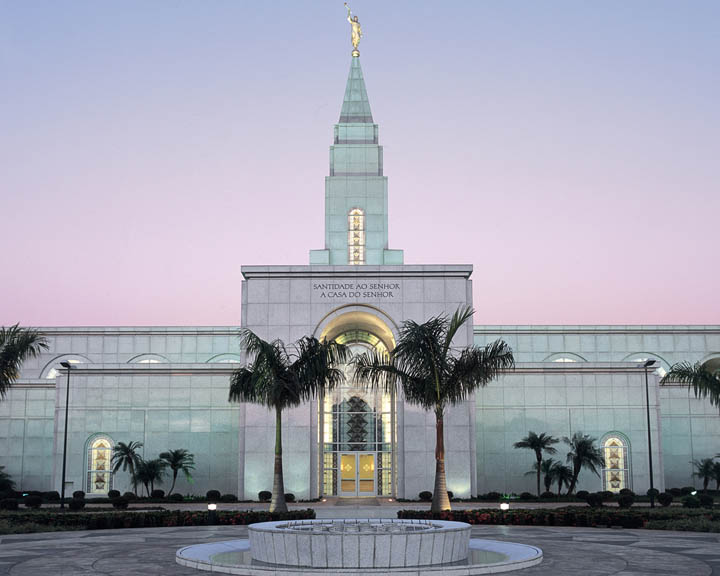
To members of The Church of Jesus Christ of Latter-day Saints, the temple is the most sacred place on earth. It is the house of the Lord, and just as the inscription on the exterior of the temple states, the temple is “holiness to the Lord.”
I left the temple feeling as if I was hopping from cloud to cloud. I felt renewed and so very happy. Life didn’t seem daunting and overwhelming at all at that moment. As I drove away from the beautiful temple grounds, I thought in my mind: “finally, I hit “refresh” on my life..”
This article was written by Livi Whitaker, a member of The Church of Jesus Christ of Latter-day Saints.
Livi is a member of The Church of Jesus Christ of Latter-day Saints (“Mormon”). She is a Communications Specialist at an Insurance Brokerage firm in Boise, ID. Professional experience include writing – based positions at the United Nations and AARP, Media Services, Inc. She is an avid blogger at thebrightbit.com and sensiblystyled.com, a modest fashion blog. Livi Whitaker is a freelance writer and authors the positive blog for all things lovely, www.thebrightbit.com.
Additional Resource:
Family History Indexing
March 22, 2013 by Livi Whitaker
Filed under Mormon Beliefs
The Church of Jesus Christ of Latter-day Saints, often mistakenly called the Mormon Church sponsors a program called “indexing,” through which genealogical records can be digitized. Thousands upon thousands of volunteers, mostly LDS, copy photographed records onto forms. The work is all done online. The digitized records are shared with the organizations which provided them, and they are made available to researchers everywhere.
I was really intimidated by Indexing at first. It was the unknown, I guess – the idea that it would be complicated. Always having wanted to volunteer my time to Indexing, I decided to break through my barrier of ignorance and see what it was all about.
And I loved it! I was so surprised how easy it was. I worked with Family Search to do my indexing, the family history wing of The Church of Jesus Christ of Latter-day Saints. It turned out to be as simple as signing on, picking a document and using simple data entry. If you want to give indexing a test run, try this simple online sheet here. Some good FAQs about Indexing on Family Search can be found here.
My favorite part about indexing was the actual information itself. I loved reading through the census rolls, military lists or other documents that held names and places. It was so very interesting seeing where American citizens had originally been born, what nationality their spouse was, how often they moved, what their profession was and other personal facts.
This seemingly limited list of people’s lives seemed to leap before me. I felt that I could feel each person and my mind lit up, thinking that this line of a data was a real person, and imagining what they must have really been like. I had a similar feeling doing indexing work that I did when I researched my own family history.
Indexing became incredibly satisfying work for me. It was something simple that I could do and feel incredibly productive and helpful about. The Church of Jesus Christ of Latter-day Saints teaches about the importance of family history work.
As a member of The Church of Jesus Christ of Latter-day Saints, I have learned about family history and genealogy my entire life. The religion, (sometimes called the Mormon or LDS Church) is entirely based on and centered on families. We “Mormons” take great stock in finding out where we come from and who was before us. The Church of Jesus Christ in fact, is quite well known for their Family History and even has a tradition of providing family trees for several U.S. presidents.
Along with numerous other organizations, FamilySearch is working on three major campaigns. The first is the U.S. Immigration and Naturalization Community Project. The goal is to make it possible for everyone who has immigrant ancestors to discover and learn about those ancestors’ stories online.
Another campaign is the Italian Ancestors Community Project. This is a massive effort, perhaps even more massive than the 1940 census, to index and publish Italian civil registrations such as births, marriages and deaths. This campaign will continue for a number of years.
FamilySearch is also working in Latin American countries, where indexing is not as well known as it is in the United States. Brazil and Mexico are two countries being assisted in indexing now, and other Latin American countries will soon follow.
The Church of Jesus Christ of Latter-day Saints, has 2 million rolls of microfilm which have not been indexed. These rolls contain billions of names. In addition to the contents of the vault, other new records are being gathered at the rate of about 35 million images per month. Each image contains one or more names.
Although FamilySearch continues to work on publishing those images, currently they are not searchable online. Judson pointed out three key needs that must be met in order to index all the films and images and eventually make those images searchable online.
The first and probably most important need is indexers, who will always be needed. The more indexers, the sooner all the images and films will be transcribed and searchable online.
Michael Judson, manager of Indexing Workforce Development, said,
“Anyone who is willing to invest a little effort and time can be good at indexing, “FamilySearch works hard to make it possible for everyone and anyone to find their ancestors. As long as there are more records, we will try hard to acquire those records and get them published to make them available for others. The technology and tools are there; we just need more hands and time.”
Judson said more arbitrators are needed as well. Arbitration is a crucial step in the process. After the images get indexed by two different volunteers, the system compares the data. If different, an arbitrator gets involved and decides which set of data is the right one.
“Since arbitrators have more indexing experience, they greatly help to raise the quality of the indexing world,” said Judson.
And raising the quality of indexing work is the third need.
I found great satisfaction and excitement in my entrance into Indexing. Whether you are interested for your own family, or for helping family history work move forward in general, Indexing is certainly worth a try.
This article was written by Livi Whitaker, a member of The Church of Jesus Christ of Latter-day Saints.
Livi is a member of The Church of Jesus Christ of Latter-day Saints (“Mormon”). She is a Communications Specialist at an Insurance Brokerage firm in Boise, ID. Professional experience include writing – based positions at the United Nations and AARP, Media Services, Inc. She is an avid blogger at thebrightbit.com and sensiblystyled.com, a modest fashion blog. Livi Whitaker is a freelance writer and authors the positive blog for all things lovely, www.thebrightbit.com.
Additional Resource: